Reconstructive Dentistry in Oakdale, CA
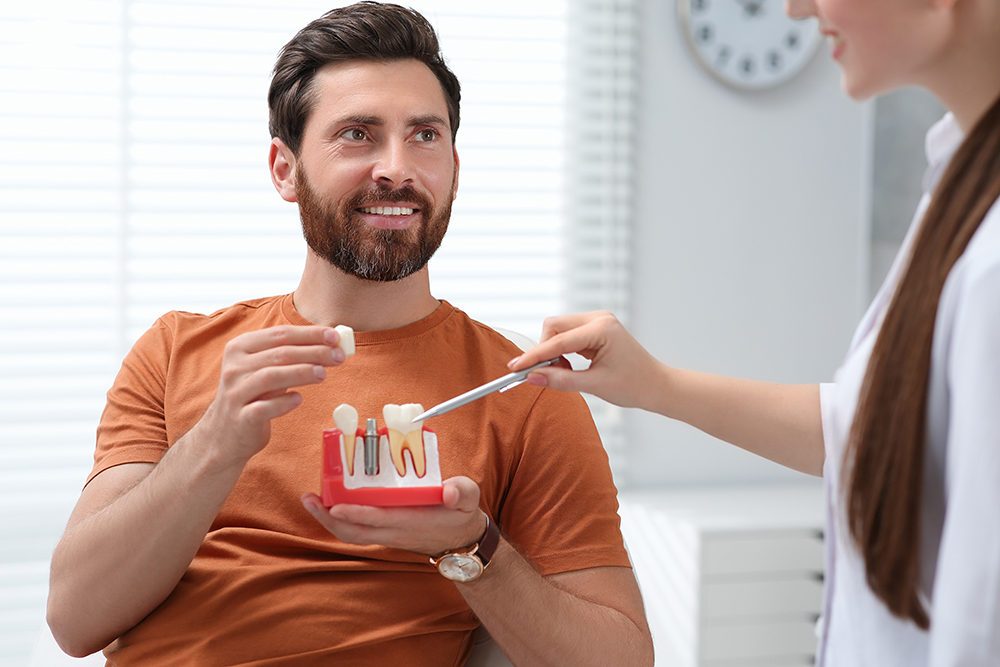
Patients can have damaged teeth restored or lost teeth replaced with Reconstructive Dentistry. This branch of dentistry aims to prevent more dental issues, improve your smile’s appearance, and promote excellent oral health. Blackhart Dentistry offers Reconstructive Dentistry in Oakdale, CA. Find out the different reconstructive services available at our office and how they can help your current dental condition.
Revive Your Smile’s Health and Function
The goal of Reconstructive Dentistry, sometimes referred to as Restorative Dentistry, is to restore the function and appearance of lost or damaged teeth by replacing or repairing them. It uses a variety of techniques to treat problems such as tooth decay, cavities, tooth wear, and tooth loss. Some of the services under Reconstructive Dentistry are also cosmetic in nature. They help enhance your overall smile and increase self-confidence.
Additionally, Reconstructive Dentistry helps preserve general oral health and avoid consequences like infection or periodontal disease by correcting structural problems and stopping additional damage.
Restorative Dental Services We Offer Near You
For patients in need of full mouth restoration or smile reconstruction in Oakdale, Blackhart Dentistry offers the following restorative services:
- Dental Crowns: Restoring a damaged or unhealthy tooth can be accomplished using a dental crown, which looks like a cap. In addition to helping with size and shape restoration, it can strengthen a tooth’s structure and enhance its appearance.
- Dentures: One tooth, several teeth, or an entire dental arch can be replaced with custom dentures. They are prosthetic teeth that can be custom-made to fit with your existing teeth and/or implants, attached permanently to your jaw using dental implants, or be completely removable.
- Dental Bridges: A dental bridge is a restoration that can replace one or several missing teeth in a row. It is composed of one or two dental crowns that are placed over your healthy teeth on either side of the gap, and one or several prosthetic teeth that are attached to the crowns.
- Dental Implants: A dental implant serves as a long-term substitute for missing teeth. It resembles a screw and is made of titanium alloy or a similar biocompatible material. To serve as the root for a new crown, the implant is securely inserted into the gums. Once healed, an abutment for a crown can be attached to the implant, and a crown made to restore your missing tooth.
- All-on-4 Implants: These restorations can replace an entire upper or lower set of teeth with four or more implants. These four implants can be used to place a new set of fixed replacement teeth. Sometimes called “teeth in a day,” this is a way to replace all of your teeth with a hybrid denture that is attached to your jaw, without blocking your palate, and without having to remove it. It is still important to have regular dental cleanings where your dentist will remove it every six months to clean it and replace the screws.
- Implant Dentures: There are other removable options for dentures with implants, which can be a better choice for cleaning, and they are still very secure.
Effective Missing Teeth Solutions in Oakdale
Choose Blackhart Dental for the best Reconstructive Dentistry in Oakdale, CA. Dr. Blackhart and our excellent team of dental professionals can create a personalized plan to help you achieve the smile of your dreams.
We invite you to give us a call at (209) 847-0309 if you believe this dental service will improve your oral health. Our professional dental team will be pleased to schedule your consultation or respond to any inquiries you may have. We look forward to assisting you in reaching your dental health objectives!
Frequently Asked Questions about Reconstructive Dentistry
What's the difference between reconstructive dentistry and cosmetic dentistry?
Reconstructive dentistry restores the function, health, and structure of damaged or missing teeth, while cosmetic dentistry focuses on improving how your smile looks. Reconstructive treatments like crowns, bridges, dentures, and implants rebuild your bite so you can chew, speak, and stay pain-free; cosmetic treatments like veneers, whitening, and bonding refine color, shape, or alignment for appearance. The two often overlap — a well-made crown or bridge should also look natural — but the starting question is different. Reconstructive care answers “what does this mouth need to work again,” while cosmetic care answers “what would make this smile look the way I want.”
How do I know if I need reconstructive dentistry?
Common signs you may need reconstructive dentistry include missing teeth, cracked or broken teeth, teeth worn down from grinding, chronic tooth pain, difficulty chewing on one side, loose or shifting teeth, or an old filling or crown that’s starting to fail. Trauma from a fall or sports injury and advanced gum disease are also frequent reasons patients need restorative work. If your bite feels different, your jaw hurts when you chew, or you’re avoiding certain foods because of dental discomfort, those are strong indicators too. A dentist can confirm what’s going on with an exam and x-rays and then map out which of the reconstructive options — dental crowns, bridges, implants, or dentures — is the right starting point.
How do I choose between a bridge, an implant, and a denture for a missing tooth?
The best choice depends on how many teeth are missing, the health of the surrounding teeth and gums, how much jawbone is present, and how permanent you want the solution to be. A dental implant is typically the longest-lasting option and preserves jawbone, but it requires minor surgery and several months of healing. A dental bridge is faster and non-surgical but relies on the two neighboring teeth for support. Dentures work well when many teeth are missing and are the most affordable path, though they can shift over time. A consultation with x-rays is the only way to know which option realistically fits your mouth, health, and goals.
What is full mouth reconstruction, and how is it different from single-tooth restoration?
Full mouth reconstruction is a coordinated treatment plan that rebuilds most or all of the teeth in both the upper and lower arches, usually combining several procedures like crowns, bridges, implants, gum treatment, and sometimes orthodontics. A single-tooth restoration fixes one tooth in isolation — a crown for a cracked molar, for example, or an implant for one missing tooth. Full mouth reconstruction is different because the dentist has to plan the bite, jaw alignment, and appearance as one connected system, not one tooth at a time. It’s usually recommended when someone has widespread wear, multiple missing teeth, severe decay, congenital tooth issues, or bite problems that a single procedure couldn’t solve on its own.
How long does a full reconstructive dentistry treatment plan usually take?
A simple reconstructive case — one or two crowns or a bridge, for example — usually takes two to four weeks from consultation to final placement. A more involved plan that includes dental implants or All-on-4 treatment can take 4 to 12 months because the implants need time to fuse with the jawbone before the final teeth are attached. A comprehensive full mouth reconstruction combining multiple treatments often runs 6 to 18 months, since the dentist needs to sequence the procedures and let each stage heal before the next. The exact timeline depends on how much work is needed, whether extractions or gum treatment come first, and how your body heals along the way — a treatment plan built during your consultation will map out the actual dates.
What should I expect during recovery from reconstructive dental work?
Recovery varies by procedure — a single crown or bridge is essentially back to normal within a day or two, with mild soreness in the gums that fades quickly. Extractions and implants involve more downtime, usually 3 to 7 days of swelling and soft-food eating, with full healing taking a few weeks. Full mouth reconstruction is done in stages, so you’re only recovering from one phase at a time, not the whole plan at once. Common at-home instructions include eating soft foods, avoiding hot drinks for the first day, gentle rinsing with salt water, and skipping vigorous exercise for 24 to 48 hours after surgical steps. Your dentist will give you specific aftercare instructions tailored to the exact procedures in your plan, and follow-up visits let the team check healing before moving to the next stage.
Can I combine reconstructive and cosmetic dentistry in the same treatment plan?
Yes — most reconstructive plans naturally include cosmetic considerations, since patients want restored teeth to look as good as they function. A dentist can pair reconstructive work like crowns, bridges, or implants with cosmetic treatments like teeth whitening, veneers, or dental bonding as part of one connected plan. The sequence usually matters — for example, whitening is typically done before crowns or veneers so the new restorations can be matched to the brighter shade. A consultation lets your dentist look at both goals together and put the treatments in the right order so the final result looks unified rather than patched together.
Is reconstructive dentistry painful, and are sedation options available?
Reconstructive dentistry is not painful during treatment because the area is fully numbed with local anesthetic before any procedure begins — most patients feel pressure and vibration but no sharp pain. Some soreness or tenderness in the days after longer appointments is normal and usually manageable with over-the-counter pain relievers. For patients with dental anxiety, a strong gag reflex, or long multi-procedure appointments, many practices offer sedation options like nitrous oxide (laughing gas) or oral sedation to keep you relaxed throughout the visit. Let your dentist know before the appointment if you’d like to explore sedation, so the team can plan the visit around your comfort.
Where can I find a dentist for reconstructive dentistry in Oakdale, CA?
Blackhart Dentistry offers a full range of reconstructive dentistry services in Oakdale, CA — including crowns, bridges, dentures, dental implants, and All-on-4 treatment — at 1419 W F St, Oakdale, CA 95361. Call the office at (209) 847-0309 to schedule a consultation and the team will walk you through which restorative options fit your case, the timeline, and what to expect at each visit. Office hours are Monday 9:00 a.m. to 6:00 p.m., Tuesday and Wednesday 8:00 a.m. to 5:00 p.m., Thursday 8:00 a.m. to 3:30 p.m., and Friday 8:00 a.m. to 1:00 p.m. You can also request an appointment through the contact page, or review payment and financing options ahead of time if you’d like to plan the treatment budget.
Do you offer reconstructive dentistry for patients coming from Modesto, Riverbank, or other nearby Central Valley towns?
Yes — Blackhart Dentistry welcomes patients from Modesto, Riverbank, Escalon, Waterford, and other nearby Central Valley communities for reconstructive dental care. The office is located along the highway on the way toward Riverbank and Modesto, at 1419 W F St, Oakdale, CA 95361, which keeps the drive straightforward for patients coming in from surrounding areas. Reconstructive plans often involve multiple visits over several months, so the team can help sequence and combine appointments to reduce the number of trips for anyone traveling farther in. Call (209) 847-0309 to check availability, or use the contact page to request a consultation.
What Our Patients Say